
 Amazon
 eBay
eBay
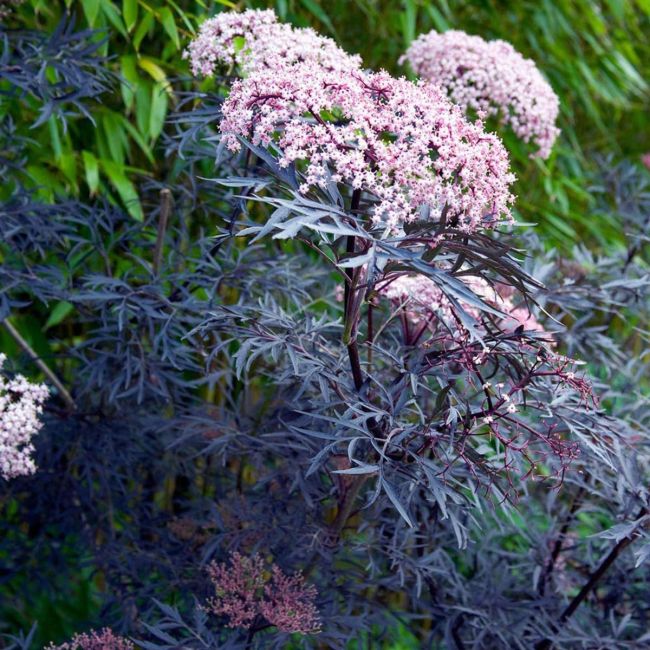


Sambucus nigra Black Lace - Fern Leaved Elder - Plant in 9cm Pot
Sambucus nigra are native to much of Europe, including the Uk. and north Africa. Much to my surprise, the author also saw a plant in a garden in Tagaytay, Philippines with flowers, unripe and ripe fruit all at the same time! Sambucus nigra Black Lace (correctly but rarely properly named Sambucus nigra f. porphyrophylla Eva) was raised at the East Malling horticultural research station in Kent. When first introduced in 2000 this, then very different, dark, cut leaved form caused a real spike of interest. Subsequently granted the RHS Award of Garden Merit it has become a very popular plant. A beautiful form of this native plant. Striking dark purple deeply cut leaves with large, flattish heads of small pink, fragrant flowers from May to June, that contrast beautifully with the foliage. The flowers are followed by abundant purple black berries that are edible and have many culinary uses and are also a favourite with birds, so don't delay harvesting if you wish to use them! A stunning focal plant in whatever location you choose to plant it! Virtually as tough as the well known hedgerow Elder it is at home in sun or semi shade and while it will grow best in fertile moist soil, it will tolerate poor and wet soils. It can be grown as part of a mixed planting as an individual specimen or in a pot or container. When growing in a pot or container, use a good quality John Innes compost as this plant will be there a long time and peaty types of compost eventually degrade and become too packed and choke the roots. Ensure you feed regularly as a hungry plant is a poor performer. We recommend Osmocote pro 8 - 9 months. One application in early spring will provide all the nutrients the plant will need for a whole year. John Innes is a soil based compost.
These are well established, woody stemmed plants in their second year.