
 Amazon
 eBay
eBay
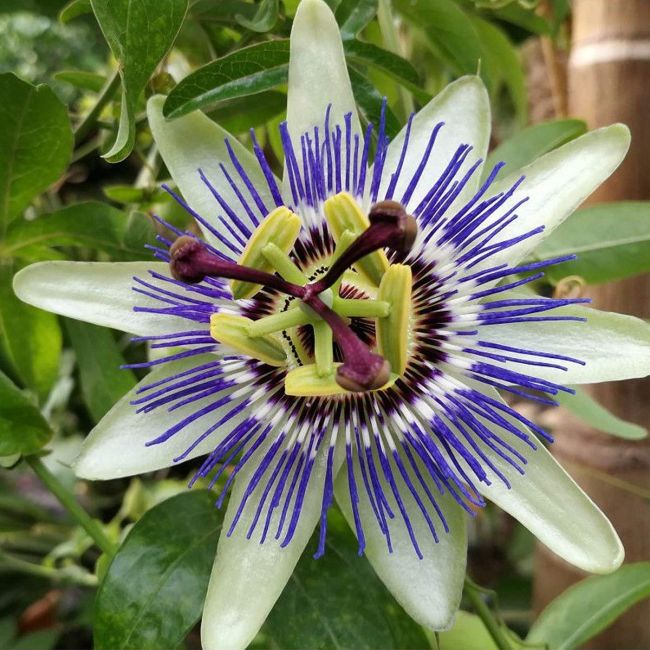



Passiflora caerulea - Passion Flower - Plant in 9cm Pot on a Cane
Perhaps one of the most beautiful and fascinating of flowering plants. Indigenous to tropical South America, there are over 350 species of Passiflora, however, sadly, most are not at all hardy. Passiflora caerulea is a semi evergreen climber that has been granted the RHS Award of Garden merit and is hardy enough to grow in the milder parts of the UK. In colder areas it is more likely to be damaged or killed by the cold unless you can offer protection. If you just want to get on and buy the plant skip the next paragraph! The reputed history of how the flower obtained its name is worth a few lines. Many theories relate to the naming of this plant; most of them alluding to the "qualities" of the fruit; however, Dr Master; a 19th century expert on Passiflora and author of Contributions to the Natural History of the Passiflorace, conjectured that the name Passiflora or Passion Flower; was originally given by the Spanish priests in South America who associated the parts of the flower with the instruments of Christ. Passion: Three stigma represent the three nails; 5 anthers represent the 5 wounds; the corona represents the crown of thorns or the halo of glory; the 10 tepals represent the 10 apostles (Peter and Judas being absent) and the lobed leaves and whip like tendrils representing the hands and scourges of his persecutors. So, there you have it. Passiflora caerulea is the species plant and one of the most popular varieties, with centuries of proven reliability. Large white flowers with central filaments of purple and blue are produced from July to September and are followed by bright orange fruits. It has lush dark leaves, an easy to grow, hardy, twining vine. Plant in full sun and a fertile, moist, free draining soil. Excellent in pot and containers. Use a good quality John Innes No.3 compost and add a controlled release fertiliser for best results. If necessary, prune in spring after all danger of frost has passed.