
 Amazon
 eBay
eBay
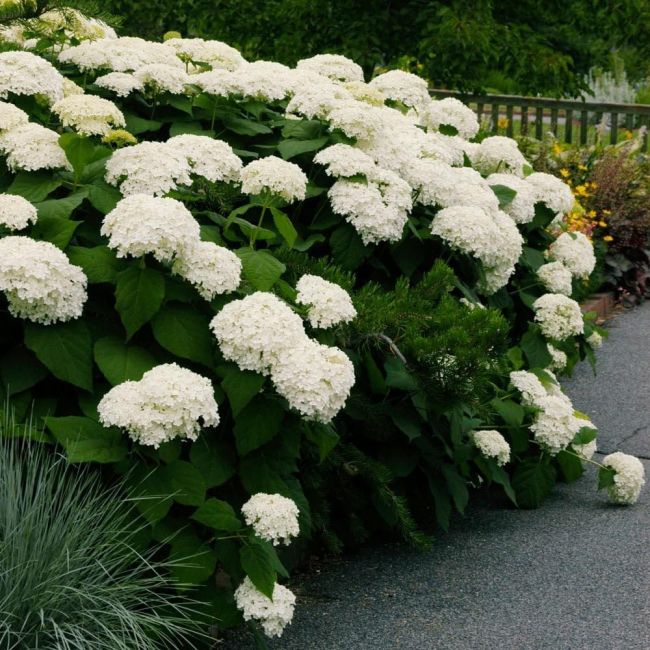


Hydrangea arborescens Strong Annabelle - Hydrangea - Plant in 9cm Pot
Hydrangeas are perhaps one of the best known garden plants. Hydrangea aborescens are originally from East Asia and North and South America. These robust and reliable plants produce a truly stunning display in summer and autumn. One of the loveliest hydrangeas, Hydrangea arborescens Strong Annabelle is a relatively new introduction with stronger, more rigid stems than ordinary Annabel, so are much more able to hold the huge blooms upright. Hydrangea arborescens Strong Annabelle produces huge globes of tightly packed, creamy white bracts that look like giant snowballs in late summer. Into autumn, the showy flowerheads fade to pale lime and the dark green, while the pointed leaves turn a soft yellow. It has an upright habit and makes a breath taking feature in a partly shady border, particularly when planted in groups or with other hydrangeas. The flowerheads are a popular choice for dried flower arrangements. Easy to grow in sun or semi shade in most soils, however, Hydrangeas do not like very dry soils. Remove faded flowerheads in spring after the danger of frosts, cutting back the flowered stems to a strong pair of buds. Take out misplaced or diseased shoots. Mulch young plants with a well rotted manure or compost in spring. Hydrangeas can be grown in the garden or in a pot or container. In containers use a good quality John Innes compost as this plant will be there a long time and peaty types of compost eventually degrade, become too packed and choke the roots. Ensure you feed regularly as a hungry plant is a poor performer. We recommend Osmoscote pro 8-9 month applied in the early spring. One application gives all the nutrients the plant requires for the whole year. John Innes is a soils based compost. A vigorous grower that will need pruning. After flowering prune back to close to the old wood. If the plant becomes too large a more drastic pruning can be undertaken!